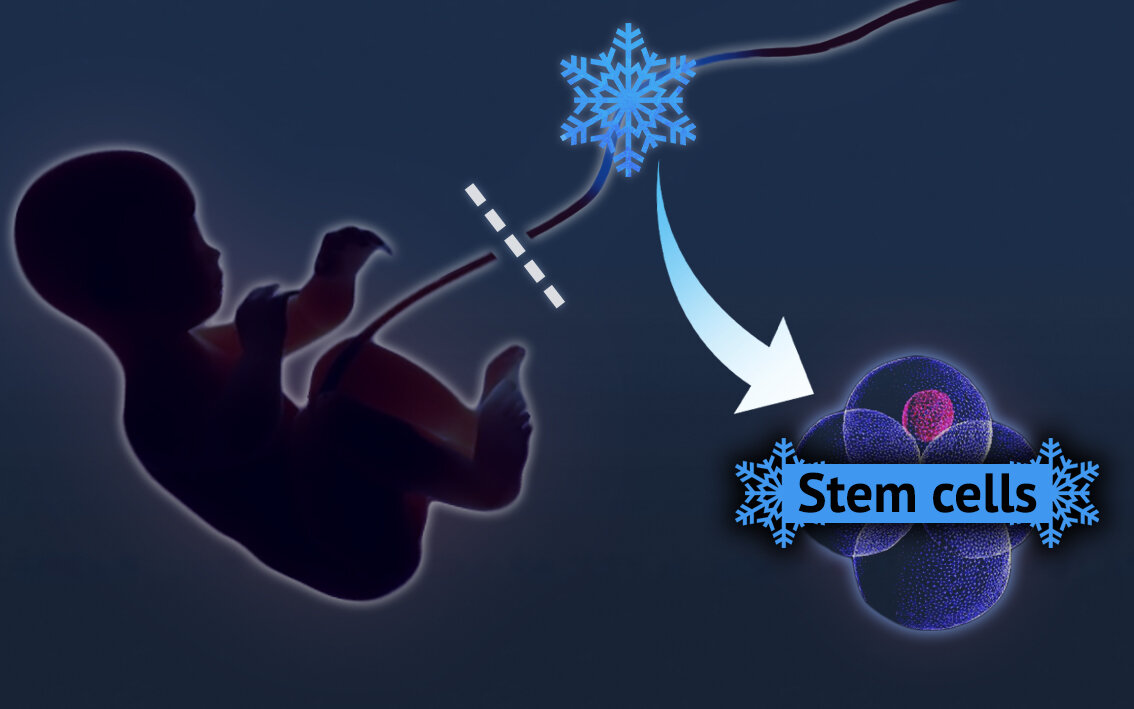
Umbilical Cord Stem Cells Current Uses Future Challenges
The cord blood is removed from the umbilical cord and the placenta soon after a baby is born. technicians or physicians collect 3-5 ounces of blood from the cord and placenta which contains about a teaspoon of stem cells. potential advantages of cord blood: the cells are somewhat more versatile than bone marrow cells, meaning that cord stem cells from placenta and umbilical cord blood. The use of adult stem cells, typically derived from bone marrow, but also from other tissues, is ethically non-controversial but their differentiation potential is more limited than that of the embryonic stem cells. since human cord blood, umbilical cord, placenta and amnion are normally discarded at birth, they provide an easily accessible alternative source of stem cells.
Umbilical Cord Saving Stem Cell Find Umbilical Cord Saving Stem Cell
Cord Cell Banking
Get Results Now
Jun 23, 2009 dr. kuypers explained that even when a patient receives stem cells from placenta and umbilical cord a cord blood transplant, there may not be enough stem cells in the umbilical cord to .
Find the best answers on theanswerhub. com. theanswerhub is a top destination for finding stem cells from placenta and umbilical cord answers online. browse our content today!. This work was funded by the ministry of higher education of malaysia through the fundamental research grant scheme (frgs/1/2016/skk08/ukm/03/5). Placenta and umbilical cord-derived stem cells.
Placenta New Source For Harvesting Stem Cells Sciencedaily
What is cord blood? cord blood bank nhs blood and transplant.


The stem cells are extracted from the umbilical cord and placenta after a baby is born. it’s a painless, non-invasive process that has no effect on either the baby or its mother. extracting stem cells from other sources, like bone marrow in a patient’s hip, for example, can be painful and requires recovery time. There are a few different sources for mesenchymal stem cells including the umbilical cord and the placenta. these tissues can be easily accessed without the need for invasive procedures. as such many clinical trials looking at treatment options for covid-19 have utilized umbilical cord stem cells from placenta and umbilical cord derived stem cells. Placenta-derived stem cells (pdscs) and umbilical cord-derived stem cells (ucdscs) display several advantages such as immune tolerance and are generally devoid of ethical constraints, in addition to their stemness qualities. they possess the characteristics of both embryonic and mesenchymal stromal/stem cells.
The placenta grows in your uterus (womb) and supplies your baby with food and oxygen through the umbilical cord. cord blood contains stem cells. these are . Cord blood is contained in the umbilical cord and placenta of a newborn child. it can be easily collected and frozen for later use. cord blood contains blood (haematopoietic) stem cells, which can produce all the other cells found in blood, including cells of the immune system.
Looking for top results? search now! find content updated daily for popular categories. Hla-matched related allogeneic stem cell transplantation has been .
The human umbilical cord (uc) and placenta are non-invasive, primitive and abundant sources of mesenchymal stromal cells (mscs) that have increasingly gained attention because they do not pose any ethical or moral concerns. current methods to isolate mscs from uc yield low amounts of cells with variable proliferation potentials. The normal human placenta and umbilical cord. See full list on frontiersin. org. Upon transplantation, mscs exert their immunomodulatory functions at damaged sites through a synergy of direct cell-cell contact. the direct cell-to-cell contact between pd-1 inhibitory molecule on t cells and its ligands pd-l1 on mscs, inhibits cd3+ t cell proliferation, induces early apoptosis and suppressed effector t cell (e. g. il-17 producing t cells, th17) responses (115). similarly, tnf receptor superfamily member 6 (fas)-fasl interactions propagate the death signal and induce t cell
The use of adult stem cells, typically derived from bone marrow, but also from other tissues, is ethically non-controversial but their differentiation potential is more limited than that of the embryonic stem cells. since human cord blood, umbilical cord, placenta and amnion are normally discarded at birth, they provide an easily accessible. Infants born extremely premature may have arrested lung development at the canalicular-saccular phase, before alveolarization could occur. these infants are inevitably exposed to postnatal interventions such as positive pressure mechanical ventilation, supplemental oxygen therapy and sustaining recurrent bouts of infections that may exert further harmful effects on the immature lung. consequently, the prematurity-induced interruption of normal alveolar and distal vascular development, which is superimposed by pulmonary inflammation and aberrant reparative process may collectively contribute to the progression of bpd (15). the lung of infants with bpd has three histopathological features: widespread but occasionally patchy interstitial edema and fibrosis may give rise to areas of relative collapse and fibrosis accompanied by more distended emphysematous lung and thus less alveolar surface area; arterial muscular hypertrophy and adventitial thickening of small pulmonary arteries leadi Mar 22, 2018 mesenchymal stem/stromal cells (mscs) derived from placental tissue stem cells derived from the human placenta and umbilical cord.
Jul 30, 2014 found in the blood vessels of the placenta and the umbilical cord, cord blood cord blood is approved only for use in “hematopoietic stem cell . Despite the relatively poor in vivo engraftment rate (0–20%), pleiotropic lung protection following transplantation is believed to be attributed to paracrine factors such as lipid based mediators, growth factors and signaling peptides (119). among the secreted bioactive substances include lipoxin a4 (120), epithelial growth factors (e. g. keratinocyte growth factor, pro-angiogenic factors) (121) and tnf-α-stimulated gene/protein 6 (122), which have potent anti-inflammatory properties. with th


0 comments:
Post a Comment